Sayyid Al-Hakeem: Economic Challenge Top Priority, Corruption Fight, Arms Consolidation State-Building Pillars
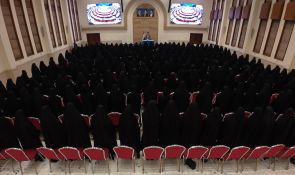
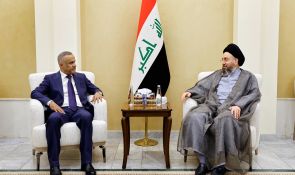
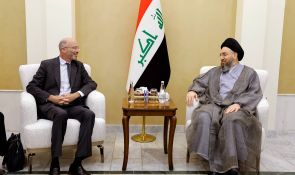
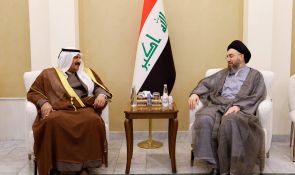
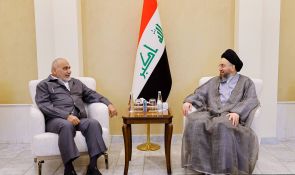
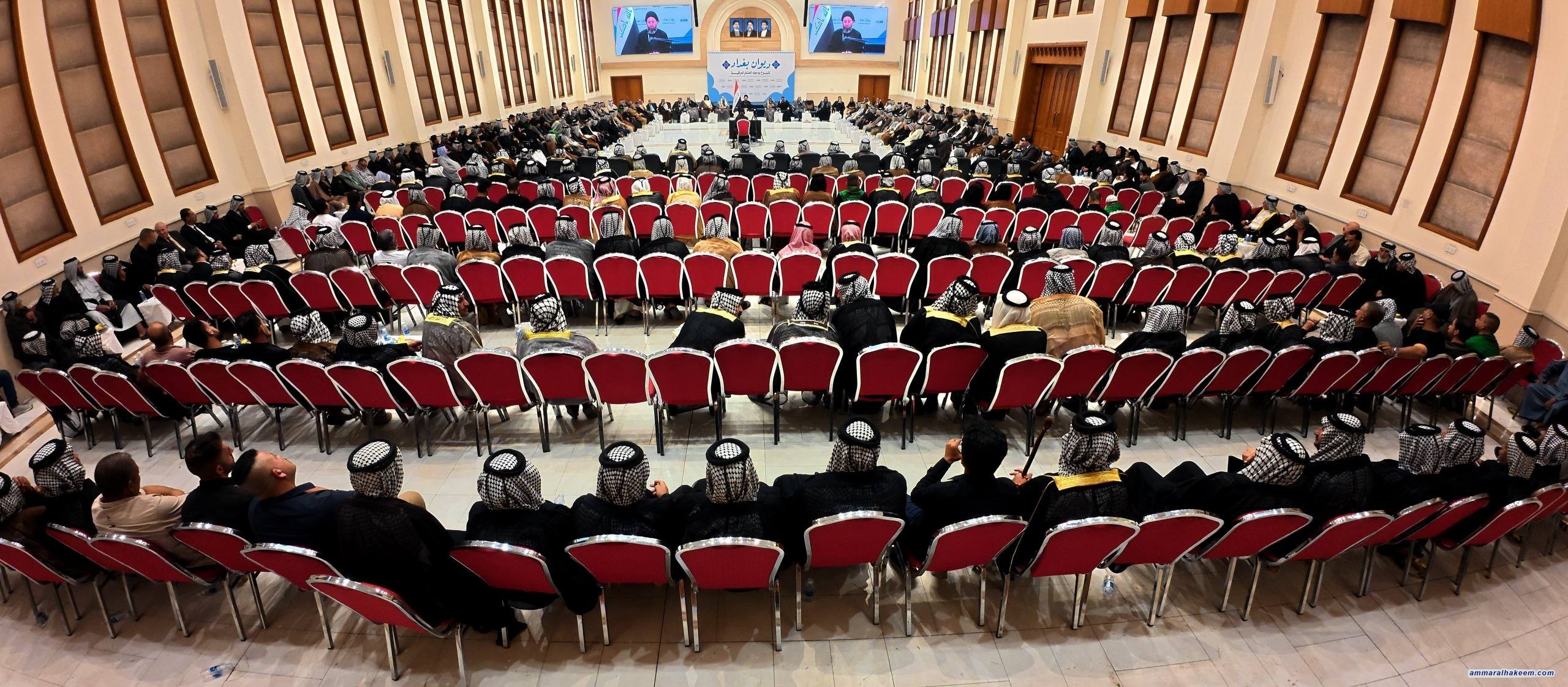
At the Baghdad Diwan for sheikhs and dignitaries of the Iraqi tribes, His Eminence Sayyid Al-Hakeem, Head of the National State Powers' Alliance, outlined the nature of the events unfolding in the region and the extent of the economic damage sustained by Iraq as a result of the decline in oil exports, describing the current circumstances as harsh and critical.
H.E. said that Iraq has provided media, political, and humanitarian support during this war, while Iraq's electricity sector has suffered as a result of the decline in gas supplies pumped to Iraq from Iran, noting that electricity is among the new government's top priorities, through the pursuit of comprehensive and radical solutions in production, transmission, distribution, and collection.
H.E. noted that the economic crisis was itself a factor behind entrusting Mr. Al-Zaidi with devising unconventional solutions, affirming that the economic challenge is now the most pressing issue facing Iraq, having overcome its security and social crises, and pointing to the need to draw lessons from this crisis by diversifying oil export outlets through a pipeline network connecting Iraqi oil to the Mediterranean and Red Seas, while stressing the need to steer clear of populist rhetoric when discussing the country's higher interest, alongside the importance of ending Iraq's dependence on oil, moving away from a rentier state model, diversifying the economy, and activating productive sectors such as agriculture, industry, tourism, investment, and modern technology.
H.E. stressed the need to confront corruption, affirming that fighting corruption is a cause that pleases Almighty Allah and satisfies the Iraqi people, conditioning this on focusing on major figures without selectivity or politicization, as the process must be a victory for public funds through the public prosecution of the corrupt, which would vindicate the honest and restore citizens' trust in the political system, expressing his full support for the government and judiciary in this task.
H.E. pointed to the end of September as the date marking the conclusion of the international coalition's mission across all of Iraq's territory, describing the consolidation of weapons under state authority as a national necessity, a call from the Marja'iyya, and a governmental approach affirmed by successive Iraqi governments.
H.E. explained the government's vision of increasing production as a fundamental entry point for maximizing revenues, which requires bringing in foreign investment alongside major companies to achieve the desired goal, pointing to notable leaps made by regional countries that adopted this approach to maximize their revenues, and stressing the need to counter campaigns of discrediting and downplaying every step Iraq takes in its own interest, as well as the need to put Iraq's relations with regional and global countries in order.
H.E. also stressed that the dues owed to farmers and contractors should be treated with the same priority as salaries, citing the role these two groups play in sustaining the wheel of production and development and providing job opportunities.