Sayyid Al-Hakeem Affirms Anti-Corruption Support, Calls For Iraqi Economic Diversification
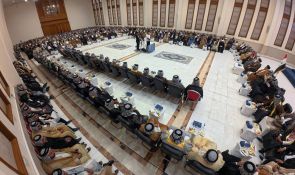
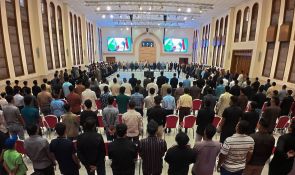
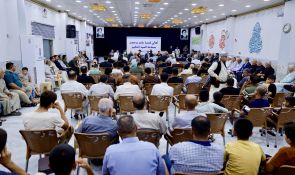
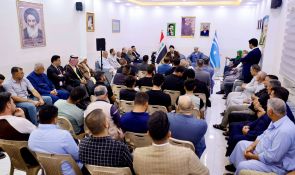
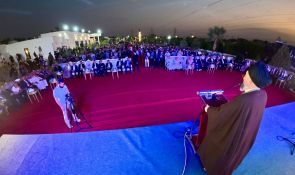
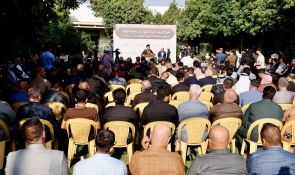
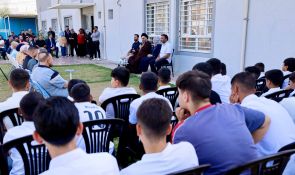
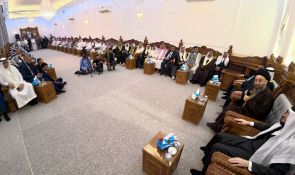
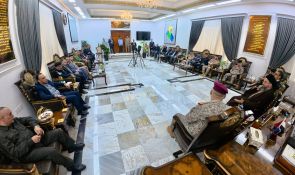
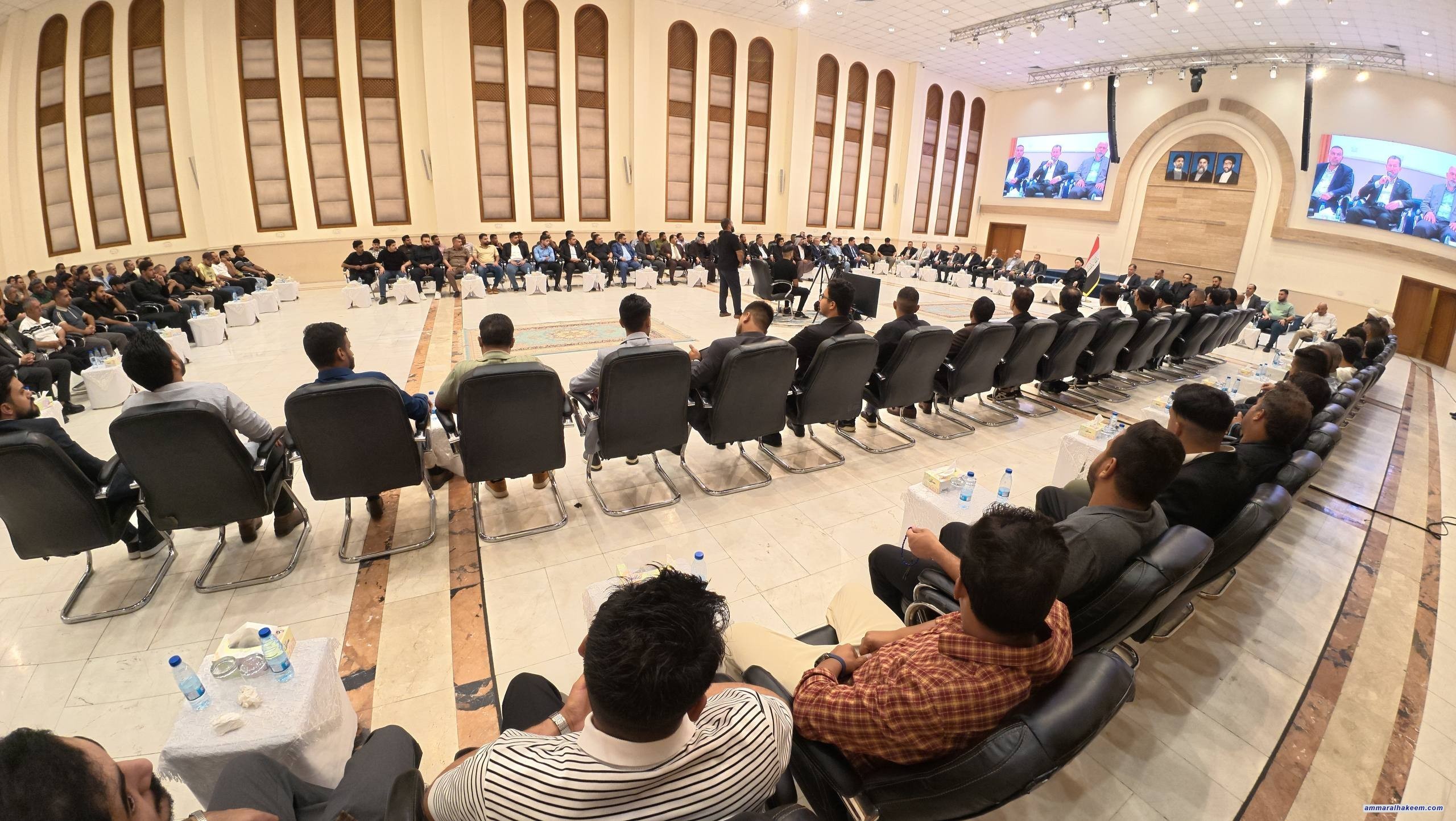
His Eminence Sayyid Al-Hakeem, Head of the National State Powers' Alliance and Head of Al-Hikma National Movement, met with a gathering of the Movement's organizational leaderships in Sadr City, commending their role in serving the pilgrims of Imam Hussein (PBUH) during the Arba'een pilgrimage, and calling for drawing lessons from the events of Taff, and how Allah immortalized the sacrifices of Ahl Al-Bayt (PBUT) and the tragedies they endured, until millions came to visit the shrine of the Master of Martyrs (PBUH) in commemoration of his memory, his approach, and his cause.
H.E. commended the roles played by the people of Sadr City, calling for further efforts to serve the city and its residents, and to provide whatever services possible within available capacities.
H.E. called for enduring hardship with patience and withstanding challenges, affirming that faith-based projects and figures with major undertakings have always faced accusation and defamation, noting that Al-Hikma project is no exception to this rule, which calls for further patience, steadfastness, and resolve. H.E. placed on the members of Al-Hikma National Movement the responsibility of defending their project, clarifying and explaining positions, and unpacking their circumstances before the public, in a way that helps dispel confusion and reveal the facts.
H.E. linked the scale of targeting to the scale of influence, noting that the relationship between the two is a direct one; the greater the influence, the greater the targeting. H.E. pointed to the mass events organized by Al-Hikma National Movement, and stressed the importance of strengthening public presence and influence, maintaining continuous communication with the public, and working to meet its needs and respond to its aspirations.
On the economic front, H.E. affirmed that Iraq is going through an unprecedented economic crisis, amid the halt of oil exports resulting from regional developments and events and the closure of the Strait of Hormuz, which has made securing salaries a difficult challenge. H.E. noted that efforts continue to secure them and to invest all available capacities, expressing hope that the ongoing negotiations will lead to ending the war and restoring stability.
H.E. renewed his call for diversifying export outlets and sources of income, and working to diversify the Iraqi economy by activating productive sectors, foremost among them agriculture, industry, tourism, and investment, in addition to keeping pace with developments in modern technology.
H.E. also renewed his support for anti-corruption campaigns, affirming that this campaign has garnered the support of political powers.
On the security file, H.E. called for valuing the sacrifices of the armed factions that were formed to confront terrorism and contributed to its defeat, until terrorism became a thing of the past, noting that Iraq is now close to ending the mission of the International Coalition on its territory. H.E. affirmed that this places Iraq before a new reality, one that requires moving into a new phase of state-building and consolidating its institutions, including confining arms to the hands of the state, within legal and constitutional frameworks.