Sayyid Al-Hakeem: Overcoming Social, Security Challenges, Unlocks Path to Construction, Development
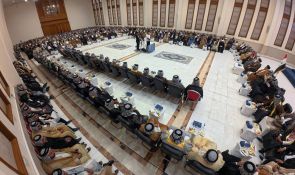
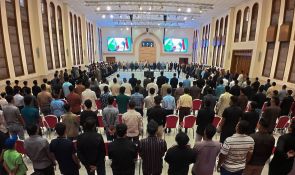
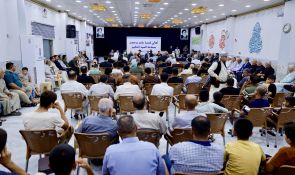
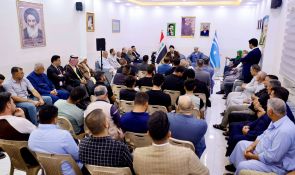
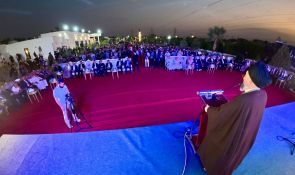
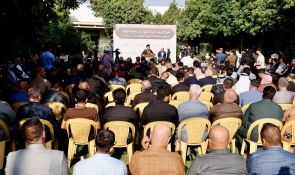
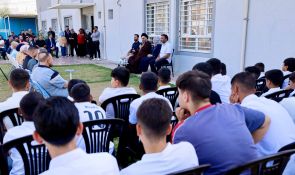
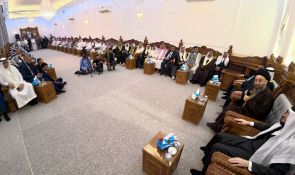
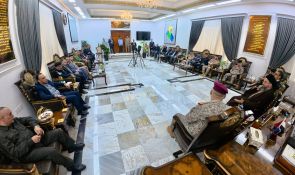
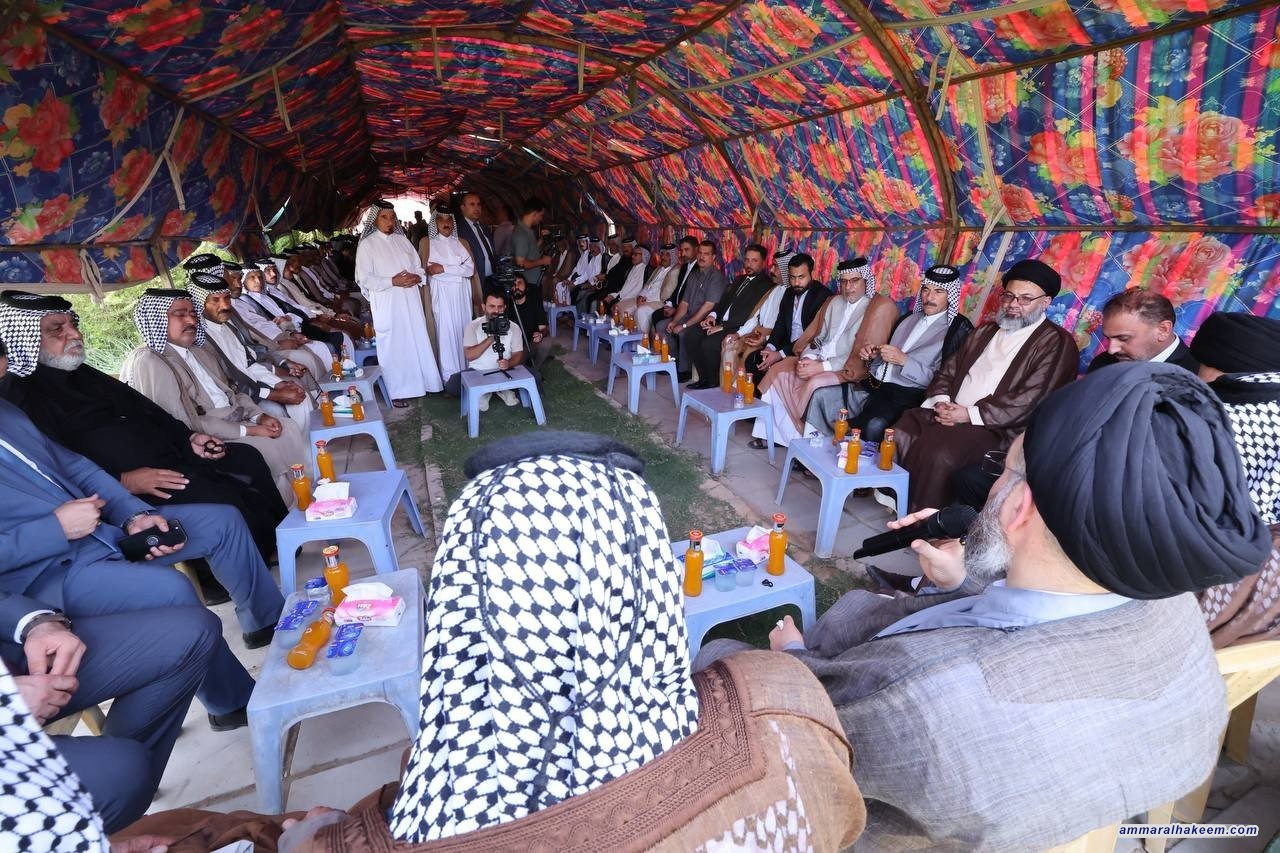
In the context of his tour of Al-Diwaniyah Governorate, H.E. Sayyid Al-Hakeem, Head of the National State Powers' Alliance, met with a gathering of sheikhs and dignitaries from the tribes of Al-Diwaniyah and Ghammas district, at the guesthouse of Sheikh Abdul-Mohsen Al-Ziyadi, recalling with them the historic relationship between the family of Imam Al-Hakeem (may his secret be sanctified) and the tribes of Al-Diwaniyah. H.E. pointed to the challenges Iraq has faced, such as the security challenge in confronting terrorism and the social challenge, and to Iraq's having overcome them, becoming free to devote itself to construction and reconstruction. However, regional events have cast their shadow over the Iraqi economy following the decline in oil production and exports in Iraq.
H.E. explained that the economic crisis is a compelling one, stressing the priority of salaries and the dues owed to farmers and contractors in order to sustain economic momentum, achieve food security, and provide job opportunities, noting that farmers deal with an annual crop and may need to borrow money to complete their work, which is where these dues become necessary for cultivating the land the following year. H.E. affirmed the people's need for services, which requires advancing projects to deliver services, provide job opportunities, and absorb unemployment, considering the crisis a temporary one resulting from the pressure of the regional crisis on countries around the world, and calling for debts owed by farmers to be deducted from their agricultural dues.
H.E. renewed his call for drawing lessons from the current crisis by diversifying oil export outlets and diversifying the Iraqi economy, recalling his previous call for laying export pipelines through the Red Sea and the Mediterranean, and stressing the need to move away from the rentier state model and activate economic sectors such as agriculture, industry, tourism, investment, and modern technology, and to save oil revenues for construction and reconstruction. H.E. noted that the economic problem contributed to Al-Zaidi taking charge of running the country and addressing crises, calling for an understanding of regional events and their impact on Iraq and the region, and affirming the importance of plans to make Al-Diwaniyah Iraq's agricultural capital.