Sayyid Al-Hakeem Calls to Establish Federation Council, Legislate Oil, Gas Laws, Federal Court
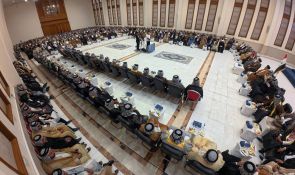
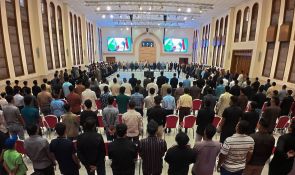
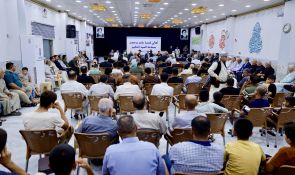
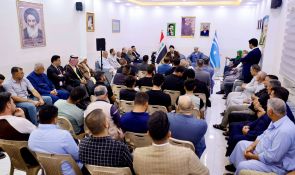
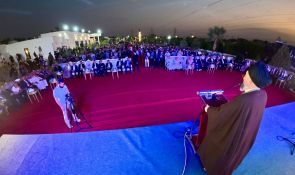
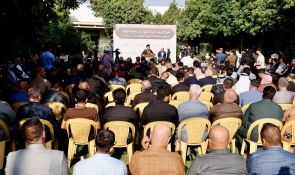
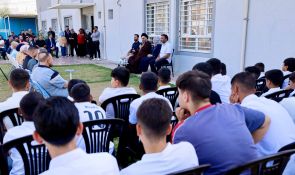
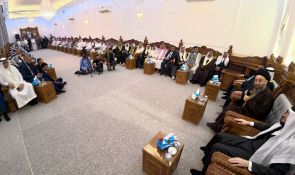
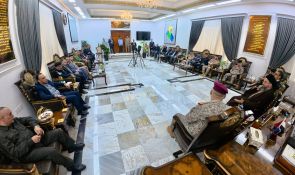
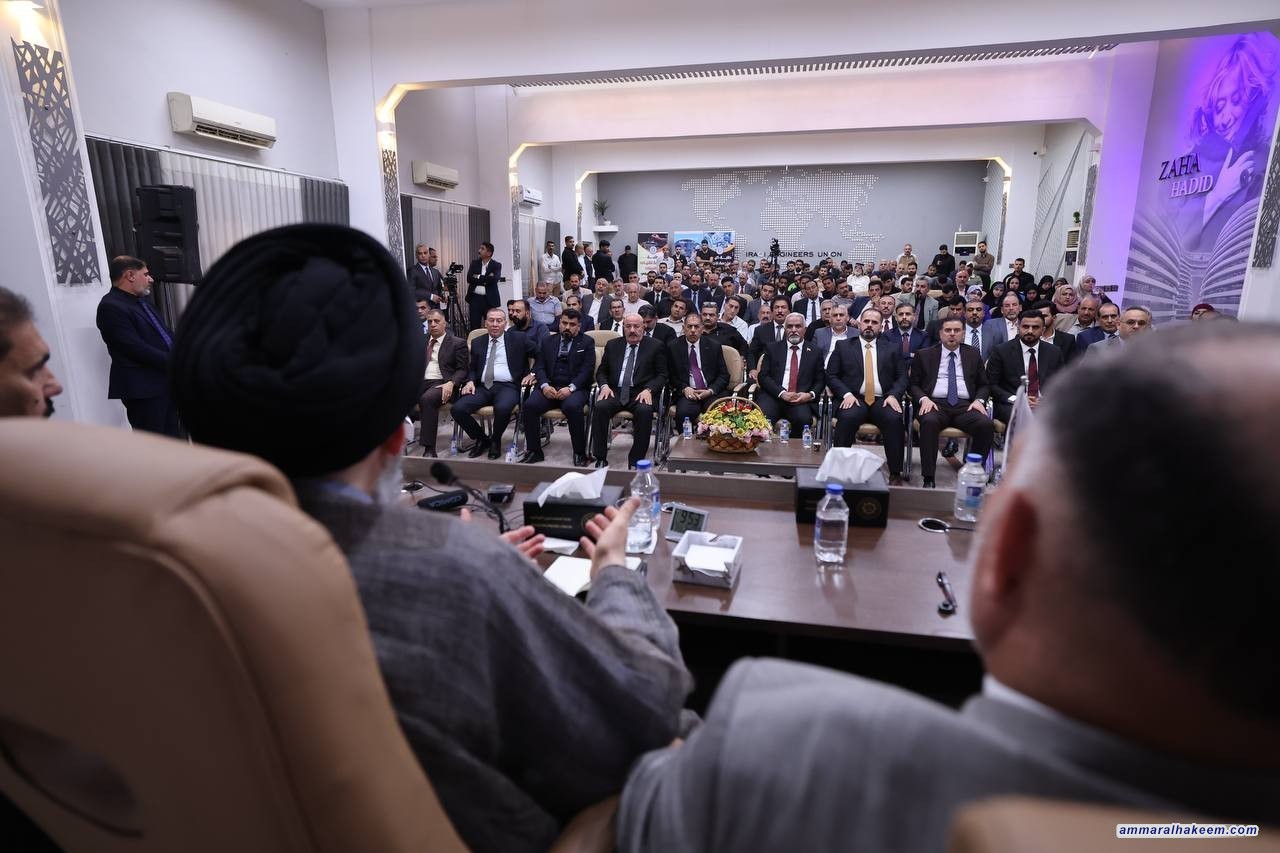
At the conclusion of his visit to Al-Diwaniyah Governorate, H.E. Sayyid Al-Hakeem, Head of the National State Powers' Alliance, met with a gathering of the governorate's elite and prominent figures, extending his congratulations on the Prophet's noble birth (Mawlid) and the birth of Imam Al-Sadiq (PBUH). After listening to their remarks, H.E. expressed his pride in Al-Diwaniyah and its people, noting that Al-Diwaniyah today is better than it once was, and describing Al-Diwaniyah Governorate as the governorate of generosity, history, and culture, and as the agricultural capital. H.E. recalled his 2013 call to make Al-Diwaniyah Iraq's agricultural capital, affirming that the agricultural capital requires a fully integrated agricultural cycle, beginning with farming, storage, food processing, and marketing, and that it should serve as a model for the other governorates. H.E. called for adopting mechanization and modern irrigation methods, which requires a comprehensive vision based on clear and achievable plans, and expressed his support for developing a framework for the agricultural capital through legislation to be voted on in the Council of Representatives.
H.E. Sayyid Al-Hakeem affirmed that there are three challenges, the first being the economic challenge affected by the decline in oil production and exports, with a budget that relies on oil revenue for 94% of its resources, expressing his regret over the absence of oil reserves that would enable Iraq to maneuver and offset lost exports, and calling for an understanding of Iraq's exceptional circumstances during the current phase, noting that the regional crisis, being global in nature, could itself generate pressure that helps resolve it.
H.E. affirmed the government's direction toward increasing oil production as an inherent right, given that Iraq is an oil-producing country with a long history in the sector, noting that this goal requires substantial investment, and considering foreign investment the solution for developing the oil industry. H.E. stressed the importance of diversifying export outlets through a pipeline network toward the Mediterranean and the Red Sea, noting that this would open Iraq to new markets, thereby helping to support Iraq politically, bolster its stability, and link its interests with those of other countries, recalling his previous calls for these pipelines, which if it had they been adopted, it would have enabled Iraq to export oil and benefit from rising prices.
H.E. stressed the importance of diversifying the economy and breaking away from the rentier economic model by supporting agriculture, industry, tourism, investment, and modern technology, considering the consolidation of weapons under state authority a self-evident condition for any state, commending the role of the armed factions in confronting terrorism and their contribution to restoring the state and liberating land, and calling for the consolidation of weapons under state authority through understanding and dialogue, sparing Iraq economic sanctions and financial risks, noting that weapons are to be handed over to the Popular Mobilization Forces as an official military institution, and affirming the importance of allowing this file the time it needs to be completed.
H.E. Sayyid Al-Hakeem described some instances of corruption as systematic theft and systematic plunder, calling for continued efforts to combat corruption without dwelling on past mistakes, while stressing the importance of addressing them, and noting the government's move toward preparing a program-based budget to support various files and governorates, indicating that this budget is a budget of priorities that is hoped to be voted on at an early date, and pointing to the government's focus on the electricity file.
H.E. pointed to the government's direction toward resolving the electricity problem through an agreement with a specialized company covering production, transmission, distribution, and collection, noting that this approach would go a long way toward resolving the crisis. H.E. added that sustaining economic momentum depends on adopting three priorities: the salaries of employees, retirees, and social welfare recipients, in addition to the dues owed to farmers and contractors, affirming that these priorities provide job opportunities and food security, and that they are complemented by the implementation of service and development projects. H.E. stressed the importance of administrative decentralization as a constitutional reality, noting that the existence of mistakes in implementation cannot invalidate this constitutional reality, and explaining that democracy is a better choice than moving toward centralization and the monopolization of powers, describing decentralization as being under threat, and pointing out that the financial crisis has had repercussions on university performance in terms of infrastructure and research.
H.E. affirmed the importance of requiring a two-thirds majority to dismiss a governor, in order to avoid political calculations in the dismissal of governors, which would provide stability for the governorates. H.E. called for establishing the Federation Council through clear and equal representation of the governorates, and also called for passing the Oil and Gas Law and the Federal Court Law, considering them two important laws for the Iraqi state. H.E. stressed the importance of fostering a culture of insurance to protect the Iraqi family and investing funds in development and service projects, while also calling for empowering youth, citing Al-Hikma National Movement's experience of empowering young leadership in the holy governorate of Najaf.