Sayyid Al-Hakeem: Justice, Stability, Independence Fundamental Pillars to Build Iraq
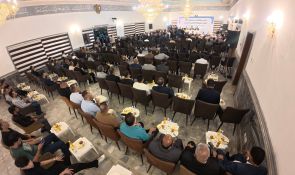
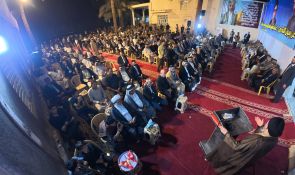
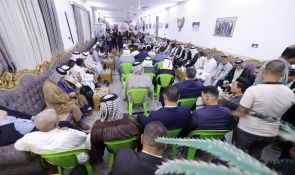
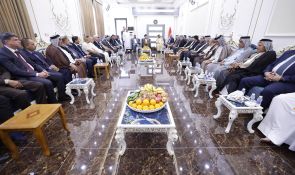
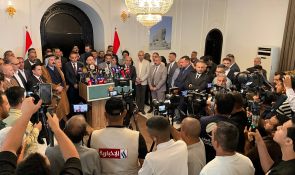
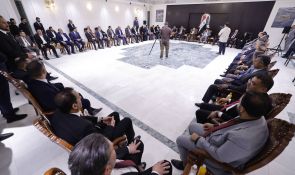
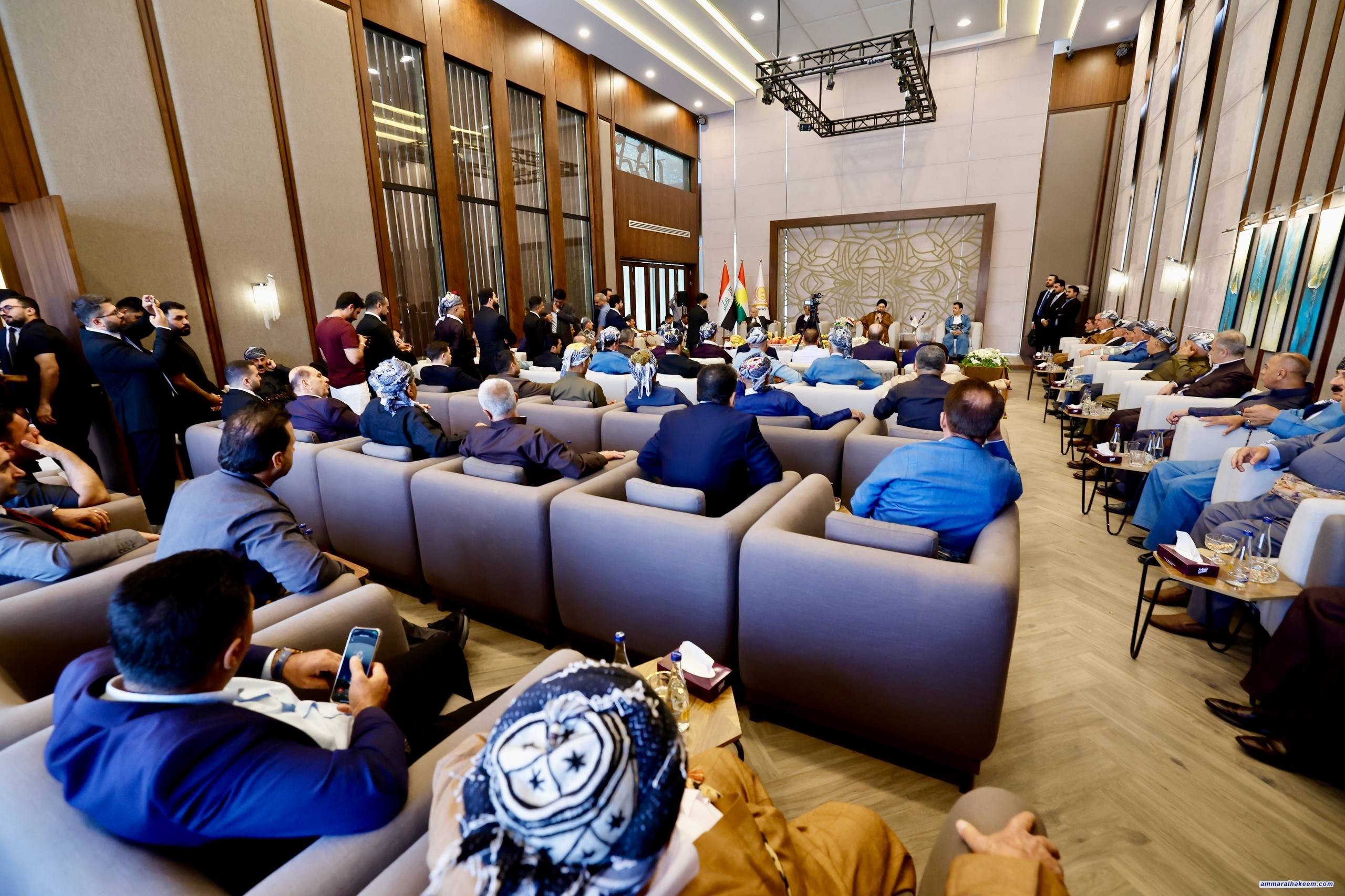
From Erbil Governorate, at the guesthouse of Sheikh Idris Al-Sorchi, His Eminence Sayyid Al-Hakeem, Head of the National State Powers' Alliance, met with a gathering of the sheikhs and dignitaries of the Sorchi clan, noting that the visit was not confined to the political dimension in Erbil, but extended to the social dimension as well, recalling the stance of Imam Al-Hakeem (may his soul be sanctified) in supporting the Kurdish people and upholding the sanctity of their blood, affirming that H.E. (may his soul be sanctified) bore the burdens of that stance, and that this stance laid the foundation for a close relationship between Arabs and Kurds, between Shia and Sunni, and between the south and the north, within the framework of Iraqi national unity.
H.E. stressed the importance of social engagement, given its role in calming conditions and opening the way for politicians to find national solutions that serve Iraq, noting that Iraq has suffered from terrorism in all its forms, while pointing to the role of Iraqis, including the Kurdish brethren, in protecting Iraq from terrorism until it became a thing of the past, as well as their role in restoring social harmony and political calm after Iraq freed itself from the dictatorial era.
H.E. considered the plurality of opinions to be natural, and that difference is to be expected in a country like Iraq, and that it should not spoil goodwill, stressing the importance of managing and resolving differences in accordance with the constitution and the law, and on the principle of mutual trust, affirming the importance of justice, stability, and independence in Iraq, and noting the necessity of addressing the economic challenge and advancing the economy in a way that achieves welfare for the Iraqi people.
H.E. also stressed the necessity of ending the rentier state model and excessive dependence on oil, calling for activating the five sectors of agriculture, industry, tourism, investment, and modern technology, and allocating oil revenues to infrastructure and for the benefit of future generations.