Sayyid Al-Hakeem From Karbala University: Managing Diversity, Accepting Others National Stability Two Pillars, Strengthening Iraq’s Regional, International Role
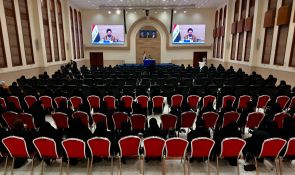
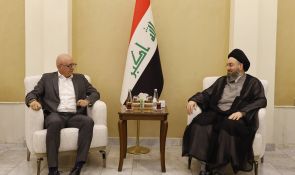
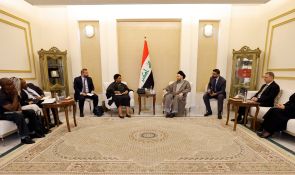
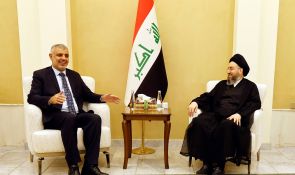
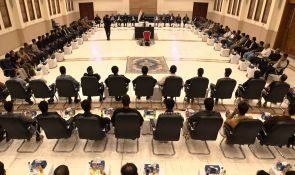
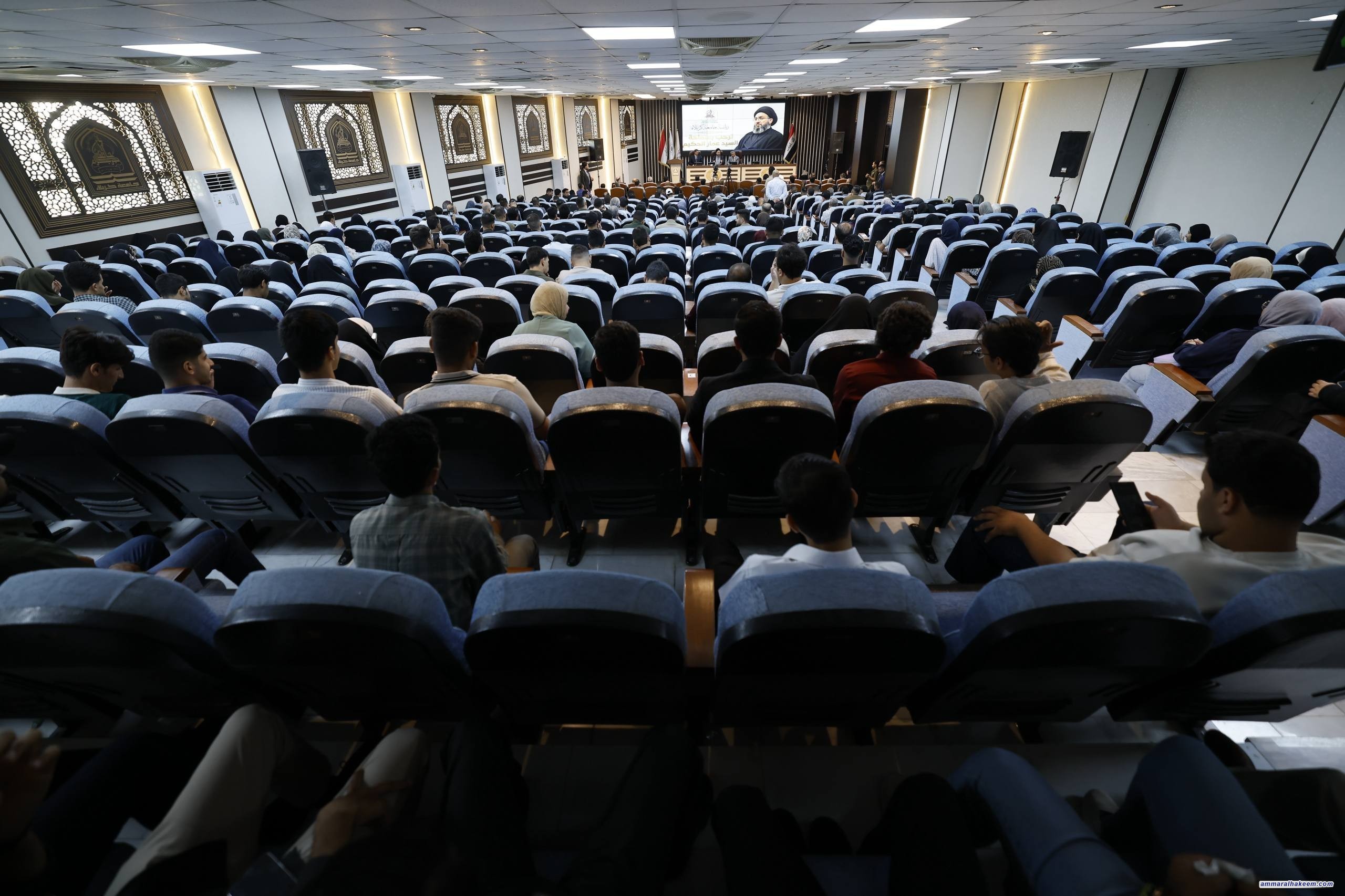
As part of the tour in the holy governorate of Karbala, His Eminence Sayyid Al-Hakeem, Head of the National State Powers’ Alliance, visited the University of Karbala and met its senior staff and a group of professors and students, congratulating them on the start of the new academic year, and explaining that this year coincided with Sovereignty Day and the end of the mission of the International Coalition in Iraq, noting Iraq’s direct impact from the war due to the fluctuation in Iraqi oil production and exports, which left difficulties in executing essential expenditures.
Politically, H.E. stressed the importance of issuing reassuring messages among the Iraqi components and establishing a just equation of governance that makes everyone feel present in the country’s decision, regarding this as an important step for Iraqi stability, and urging the elites to take their role in reaching a state of stability. H.E. explained that universities hold scientific competence and a concentration of youth, which qualifies them to take their role in defending the country, supporting the political system, and preserving achievements, in addition to breaking down the scene for the general public through the elites.
H.E. called for awareness in dealing with the other and accepting them, explaining that the other may be religious, sectarian, national, political, or intellectual, and stressing the management of diversity in the country and activating it for the benefit of the country and society, by turning the components into bridges of communication with the peoples of the region and the world, in a way that achieves the Iraqi interest and gives the world the impression that Iraq deals positively with its components regardless of their small or large numbers.
H.E. explained that the presence of the holy shrines in Iraq makes Iraq influential in the Islamic sphere, pointing to the importance of investing the tribal diversity and its extensions across the Iraqi homeland in service of Iraq and its interests, and affirming that managing diversity gives Iraq a wider reach of influence than its geographical borders, and clarifying that the alternative to managing diversity and accepting the other is internal conflict: ethnic, sectarian, tribal, and regional, and stressing the search for points of agreement and for positives.