Sayyid Al-Hakeem: Attracting Investments, Empowering Private Sector Necessary To Provide Job Opportunities For Youth
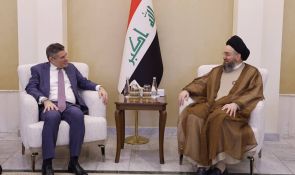
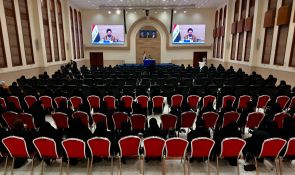
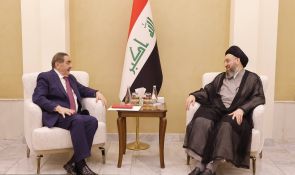
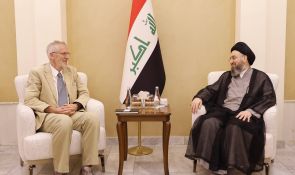
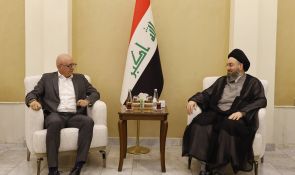
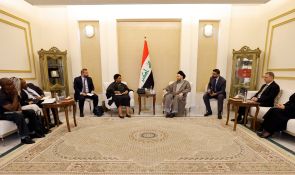
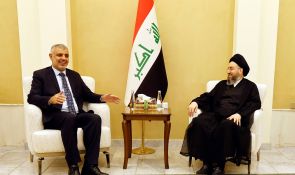
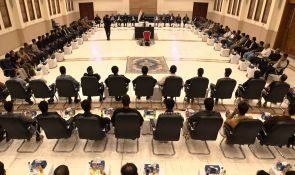
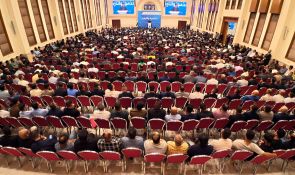
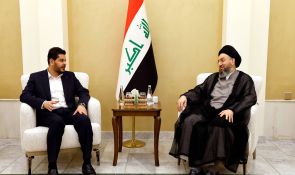
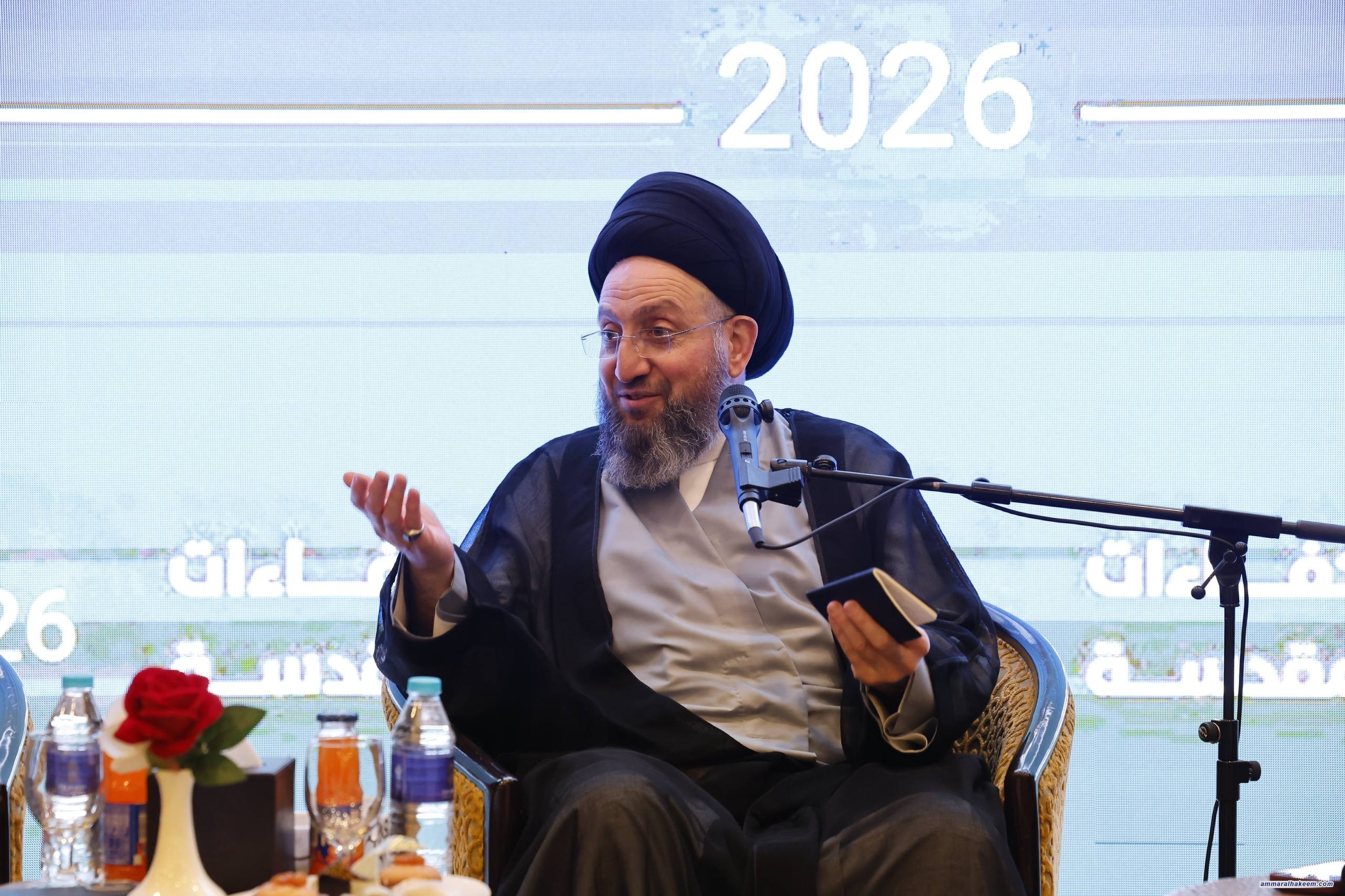
On the final stop of the visit to the holy governorate of Karbala, His Eminence Sayyid Al-Hakeem, Head of the National State Powers’ Alliance, met a group of elites and competencies in the holy governorate of Karbala, reviewing with them the latest developments of the political situation in Iraq and the region, and noting that the end of the mission of the International Coalition to fight ISIS in Iraq represents a message of recovery for Iraq. H.E. called for filling the intelligence and political vacuum resulting from the withdrawal of the International Coalition countries, with the importance of maintaining security coordination with the countries of the region to combat ISIS cells, and continuing training, arming, and preemptive strikes.
H.E. called for confronting the political and social challenge, stressing the necessity of issuing reassuring messages among the Iraqi components, achieving social justice, and adopting the principle of containment, partnership, and embrace for everyone, and cutting the road on the making of any environment that incubates terrorism. H.E. stressed the need to confront the security challenge and show no leniency toward the remaining terrorist cells that try to prove themselves through some media attempts, renewing the call to designate a special security agency responsible for tracking ISIS cells.
H.E. renewed his call to address the problem of weapons outside the framework of the state according to the set timelines, and to hold fast to Iraq’s unity and prioritize the public interest over private interests, recalling that resolving this problem is an Iraqi demand, an Iraqi interest, and a constitutional fact, stressing the inclusion of all groups to which the description of weapons outside the framework of the state applies, commending the factions’ efforts in confronting terrorism, and explaining that September 30 is the starting line for addressing this file according to a timetable of three phases.
H.E. explained the nature of the economic challenge and the Prime Minister’s personal alignment with it, noting that the government adopts the priority of raising oil production in line with Iraq’s population and needs, and diversifying export outlets through a pipeline network toward the Red Sea and the Mediterranean, while relying on foreign investments to achieve these goals, and urging the elites to support the government’s vision in attracting foreign investments. H.E. clarified that the third priority is diversifying the economy and freeing it from the rentier condition by activating productive sectors such as agriculture, industry, tourism, investment, and modern technology, and allocating oil revenues to strategic projects, infrastructure, and the Future Generations Fund, noting that holy Karbala has promising opportunities in all productive sectors.
H.E. explained that radical solutions require boldness and confronting the interests built on current problems, stressing that elites must possess political awareness and distinguish between rightful calls and those to which the description “a word of truth intended for falsehood” applies, and warning against complacency in diversifying export outlets after the war in the region ends.
H.E. called for programs that change the youth’s thinking that holds that job opportunities are tied to the Iraqi state, stressing the need to address this condition that has become a culture in Iraqi society, and calling for attracting investments and activating the private sector, noting the importance of using this phase to pass strategic laws, and calling for the religious, media, and social institutions to join forces in developing social awareness in the country, and stressing the importance of constant and continuous review.
H.E. called for focusing on performance rather than names, and for taking into account the situation of the youth in the current government, noting Al-Hikma National Movement’s adoption of the youth and its empowering them, and stressing the need to care for the youth as much as sport is cared for, and explaining that the region is living a state of escalation, with regional and international efforts to restore stability in it.