Sayyid Al-Hakeem Praises Al-Muthanna's Development Journey, Commends Agricultural, Oil Achievements
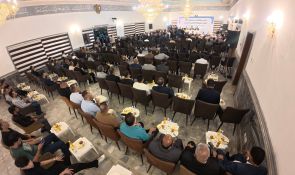
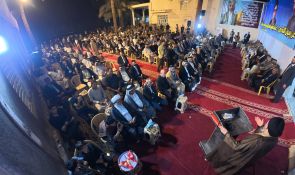
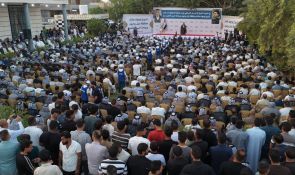
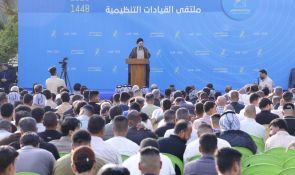
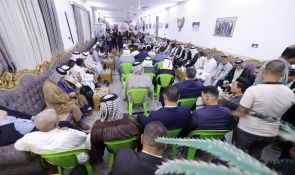
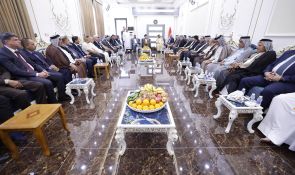
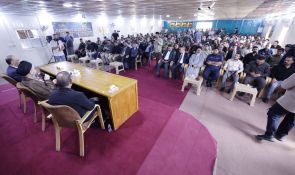
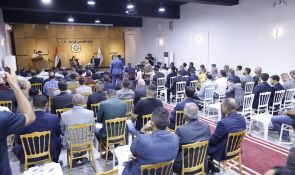
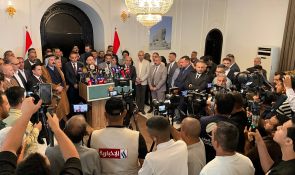
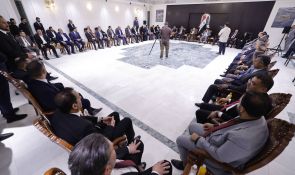
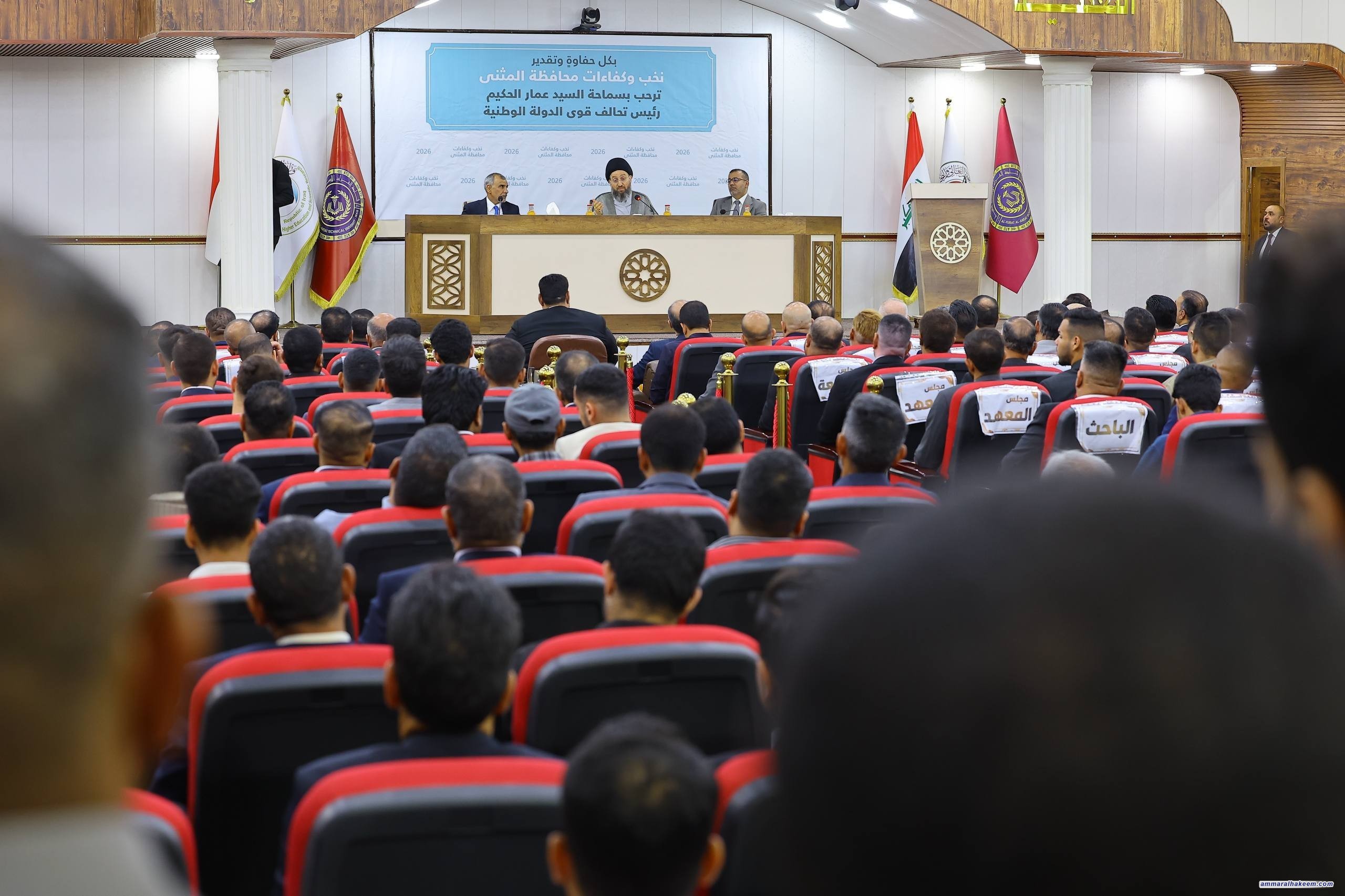
His Eminence Sayyid Al-Hakeem, Head of the National State Powers' Alliance, praised the development journey witnessed by Al-Muthanna Governorate, affirming that the figures speak for themselves as the governorate ranks first nationally in attracting investments. This came during his meeting with the elites and competencies of the governorate, in which H.E. extended his blessings to those present on the auspicious Eid Al-Ghadeer, called for the completion of the ministerial cabinet, and commended the steps taken toward consolidating weapons under state authority.
Al-Muthanna Between Oil, Agriculture, and Infrastructure
H.E. clarified that Al-Muthanna has become an oil-producing governorate and has recorded agricultural output exceeding 230,000 tons of wheat, with projections of a rise to 400,000 tons. H.E. recalled the "Rihab Al-Muthanna" Initiative, which was previously put forward as a roadmap for revitalizing Al-Muthanna's rural areas, noting that it had faced considerable opposition at the time.
On the infrastructure front, H.E. Sayyid Al-Hakeem noted that Al-Muthanna is preparing to inaugurate the Jumaima border crossing with the Kingdom of Saudi Arabia, in addition to notable development in the sanitation sector that has extended to include districts and sub-districts. H.E. called for supplementing the governorate with additional financial allocations to complete its projects, achieve sustainable development, and preserve existing projects from deterioration.
Addressing Unemployment and the Priority of Farmers' and Contractors' Dues
H.E. stressed the importance of absorbing unemployment through support for farmers and contractors, considering both groups to attract large numbers of workers and alleviate pressure on government employment opportunities, and regarding their dues as a priority no less important than the salaries of government employees.
H.E. Sayyid Al-Hakeem described the financial crisis as concerning, yet noted that Iraq is a wealthy country whose treasury is suffering from a liquidity shortage as a result of regional developments and the closure of the Strait of Hormuz, which has cast its repercussions on the global economy. H.E. expressed hope for reaching effective solutions to this crisis.
Diversifying Income Sources and Moving Away from the Rentier Economy
H.E. Sayyid Al-Hakeem called for diversifying national income sources and oil export outlets, recalling his repeated stances urging the extension of oil pipelines through the Red Sea and the Mediterranean — which yields strategic partnerships with regional states and opens new global markets.
H.E. stressed the necessity of transitioning away from the rentier state model by activating productive sectors through a five-pillar framework comprising: agriculture, industry, tourism, investment, and technology — with oil to be employed as a sovereign wealth fund for future generations and a pillar for bolstering monetary reserves.
The Ministerial Cabinet and Weapons Consolidation
H.E. Sayyid Al-Hakeem attributed the delay in completing the government's formation to the nature of the parliamentary system and its multiple components, affirming that this necessitates ongoing consultations and understandings, yet that these are proceeding within the established constitutional frameworks. H.E. noted the role of the National State Powers' Alliance in breaking the political deadlock, which contributed to the election of the President of the Republic, the formation of the government, and the designation of a young economic figure in line with the priorities of the current phase.
Regarding the weapons file, H.E. affirmed that their consolidation under state authority is a constitutional reality and a legal requirement — and before that, a demand of the Supreme Religious Reference Authority — enshrined in the law and provisions of the Popular Mobilization Forces Commission. H.E.
commended the Coordination Framework's initiative and the factions' move to disengage from the Commission.
H.E. concluded by calling on the Council of Representatives to convene an emergency session to conclude consultations and complete the ministerial cabinet at the earliest possible opportunity.