Sayyid Al-Hakeem Affirms National Common Ground Importance, Complete State-Building
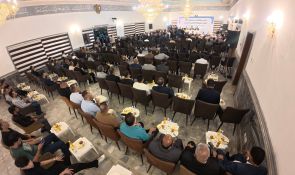
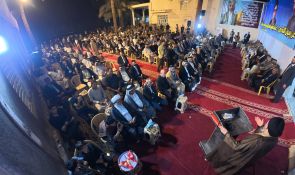
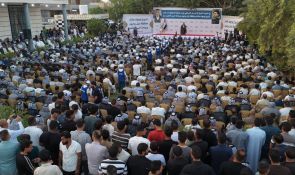
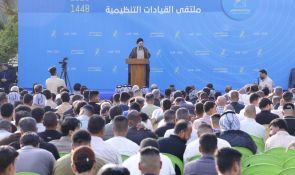
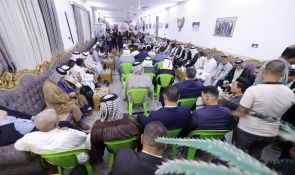
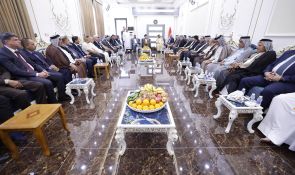
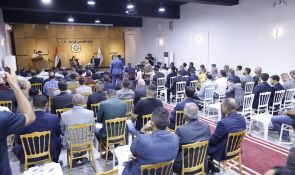
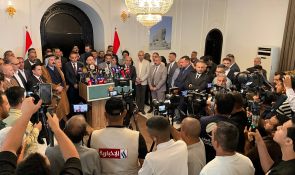
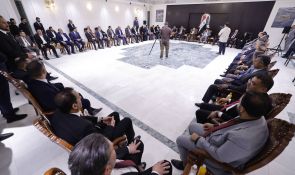
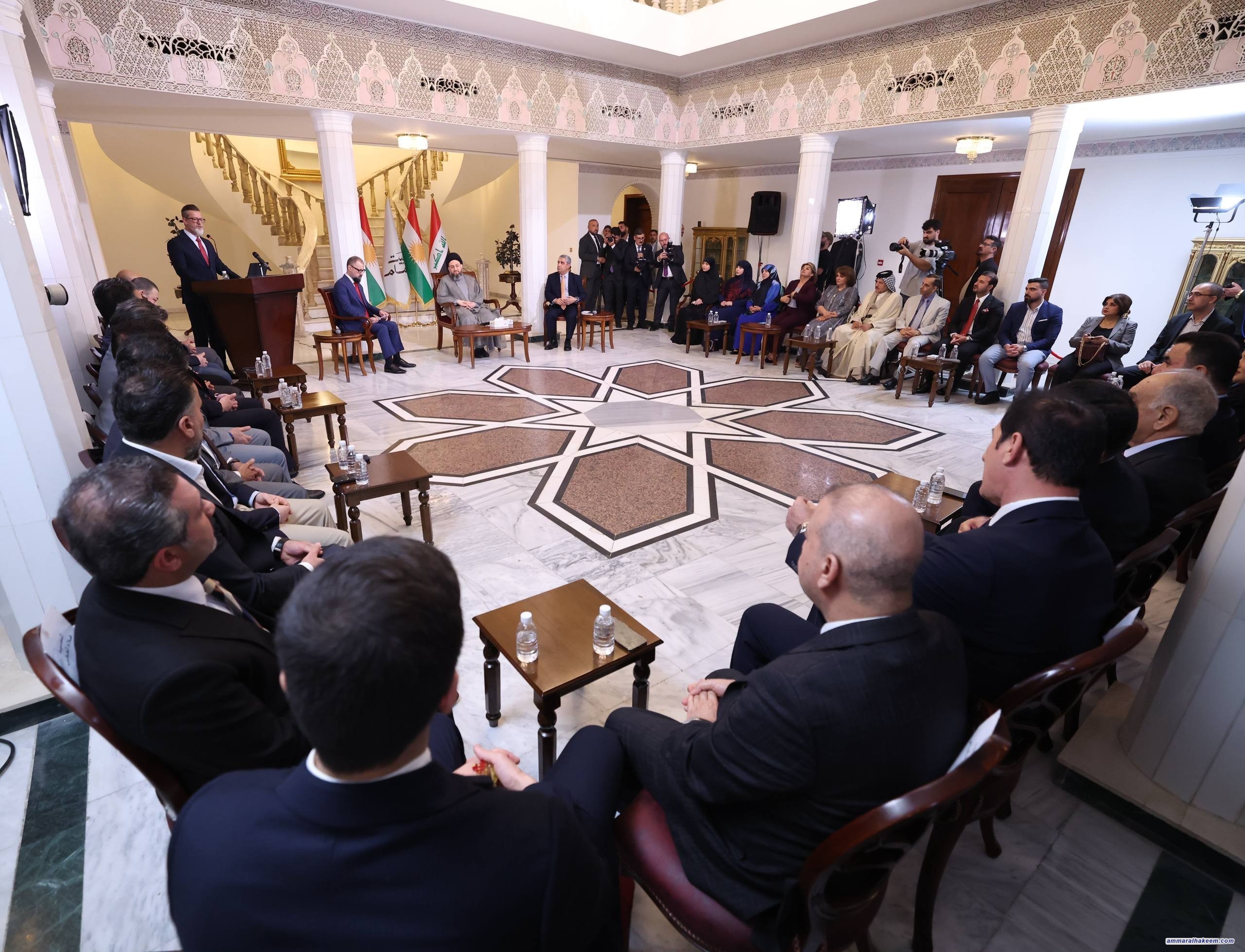
In an expanded dialogue session hosted by Beit Al-Mam, His Eminence Sayyid Al-Hakeem, Head of the National State Powers' Alliance, spoke while recalling the historical relationship with the late leader Mam Jalal Talabani, reviewing a number of current political files.
Recalling Mam Jalal — Leader of Inclusion and Bridge-Building
H.E. praised the pivotal role played by the late President Mam Jalal Talabani, recalling the nature of the relationship that had bound him to Shaheed Al-Mihrab and Aziz Al-Iraq (may Allah sanctify their souls), the national concerns and shared grievances they carried together in facing the dictatorial regime, and the deep exchange, mutual trust, and genuine national coexistence they shared in exile.
H.E. noted that his personal relationship with Mam Jalal began at the Prophet's Birthday celebration held at the Imam Al-Hakeem Husseiniya in Sulaymaniyah in the 1990s, pointing out that Mam Jalal personally insisted on constructing the husseiniya and naming it after Imam Al-Hakeem (may Allah sanctify his soul) — a clear indication of national leaders' commitment to strengthening communication between the components of society.
H.E. conveyed Imam Al-Sistani's description of Mam Jalal as "a safety valve," affirming that he was a man of inclusion par excellence and a bridge-builder with all, possessing an intellectual and cultural character that drew others to him, and stressing that the absence of such national leaders represents a qualitative loss for the Iraqi national project.
Diversity a Wealth — Common Ground the Path
H.E. affirmed that Iraq's destiny is to live within intellectual, national, religious, and sectarian diversity, calling for a search for common ground among the various components and orientations, and working to develop shared values — which H.E. described as plentiful. H.E. stressed that each generation leaves its own mark and that changing circumstances impose different visions, citing as evidence the contrast between the conditions of Mam Jalal's formative era and those of the subsequent generation.
In this context, H.E. affirmed that the Sadrist Movement is an authentic part of Iraq's political and social map, with its own space and influence — a part of the political diversity that cannot be marginalized — stressing respect for all points of view.
National Majority Principle and Comprehensive Longitudinal Alliance
H.E. called for adopting the national majority principle, ensuring that the largest component remains the largest across all equations, and proposed forming a longitudinal alliance encompassing the Shia, Sunni, and Kurdish components, explaining that this alliance could serve as an effective solution through pre-election understandings. H.E. acknowledged that implementing this vision requires more time, despite the notable convergence already present among the components.
In his reading of the Kurdish scene, H.E. noted that the Kurdish voice has drawn closer to Baghdad and increasingly favors it over any other equation, considering this an entry point for resolving many outstanding issues.
Consolidating Weapons, Completing Government — Firm Priorities
H.E. renewed the call to consolidate weapons under state authority, considering it a constitutional and legal reality and a firm religious authority recommendation, and commended the responsible engagement of the factions with this file.
H.E. also renewed his call to resolve the remaining government ministries, affirming that the Coordination Framework has authorized the Prime Minister to complete this task through negotiations with the relevant political forces and to form a full government prior to any foreign visit.
Regarding the Peshmerga, H.E. affirmed that it is an official institution like the Popular Mobilization Forces, noting that restructuring the PMF's status represents a natural entry point for reorganizing the Peshmerga as well and linking it to clear military authorities not tied to individuals.
Economy and Diversification — Roadmap for Advancement
On the economic front, H.E. stressed the necessity of building a network of economic interests to unite positions and strengthen national partnership, and called for diversifying Iraqi oil export outlets through a pipeline network extending toward the Red Sea and the Mediterranean, targeting new markets, new beneficiaries, and building shared interests with a diverse range of countries.
H.E. launched a call for what he termed the "developmental quintet," built on agriculture, industry, investment, tourism, and modern technology, considering the current period a genuine opportunity to pursue root solutions.
Call Spreading Positivity, Addressing Corruption
H.E. closed the session by renewing the call to spread and deepen positivity and move away from the language of generalizing negatives, affirming that Iraq is a wealthy country rich in resources yet suffering a liquidity strain due to the repercussions of regional developments.
On the corruption file, H.E. expressed confidence in Prime Minister Ali Al-Zaidi's intention to press forward with the anti-corruption drive, calling for targeting the major files — which H.E. termed "corruption whales" — to earn Allah's pleasure, secure the support of political and popular forces, and cleanse the political process.